Audio technology to alert CCTV control rooms to threats – from gunshots to screams – is being implemented or trialed across Britain’s town and city centres.
Cameras equipped with sound detection technology are in use, or have been tested, in at least two major cities, The i Paper has found, while several other areas have authorised CCTV and audio recording “panic buttons” in taxis, or roadside “noise cameras” in locations from Bristol to Great Yarmouth to detect vehicles which break environmental noise limits.
But the advances in audio recognition have prompted fresh concerns about the monitoring of public life by authorities – this time about whether or not conversations and other social interactions can be eavesdropped on in pursuit of improved security and law enforcement.
The next-generation equipment is trained on AI databanks to pick up “sound events” such as human screams or the buzz of an illegal drone. It is being installed or trialed by organisations ranging from local authorities to HM Prison Service.
The devices, which cost as little as £700 each, are being marketed on the basis that they can dramatically improve emergency response times, allowing police to catch criminals in situ and potentially save lives.
The UK is already one of the world’s most surveilled nations. The British Security Industry Association has estimated that there are up to 5.9m CCTV cameras in place across the country, including 24,000 public cameras operated by police, local authorities and transport operators.
In London alone, there are an estimated 900,000 security cameras – equivalent to one camera for every ten people in the capital.
But advances in technology and legal changes – including the implementation of “Martyn’s Law” next year, placing a duty on public venues to improve security measures in response to the Manchester Arena terror attack – mean the ability to “hear” as well as see unfolding emergencies is becoming increasingly in demand.
Are officials eavesdropping on our conversations?
Westminster City Council in central London last year installed 100 cameras equipped with “specialist audio and noise detection AI technology” to help combat anti-social behaviour, The i Paper has found.
In Birmingham, the city council has tested an “audible detection system” which included an ability to record audio of suspected offenders. The local authority said it had ultimately decided not to proceed with the technology.
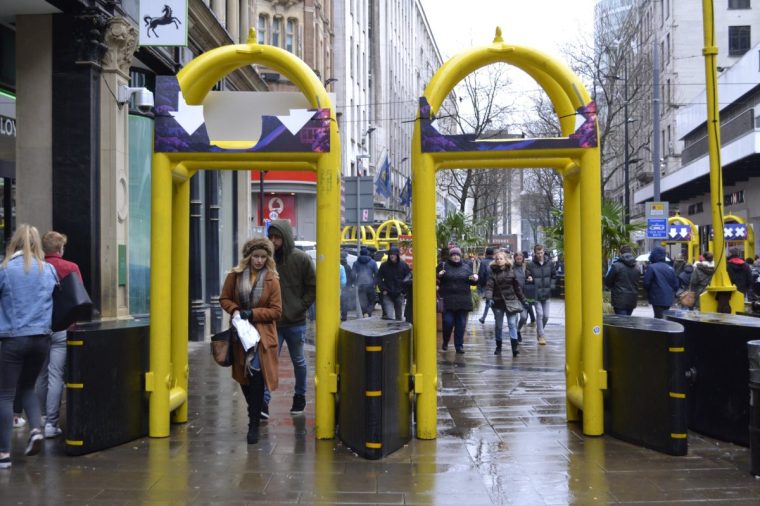
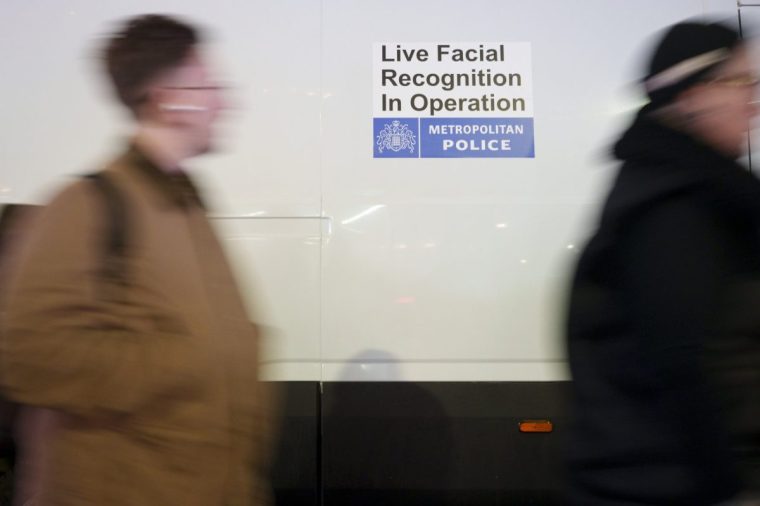
Campaigners have raised concerns about the increasing deployment of computerised surveillance and identification capabilities on Britain’s streets. Earlier this month, the Government announced plans for police forces to be allowed to routinely use live facial recognition (LFR) cameras to scan crowds in search of wanted individuals.
Privacy campaigning group Big Brother Watch said it was “very concerning” if local authorities were trialing or otherwise exploring the use of audio technology. “Amid the Government’s push for mandatory digital ID and increased use of facial recognition the British public should not also have to fear local officials eavesdropping on their conversations,” the group said.
Terror attack response time ‘reduced to seconds’ – tech firm claims
Backers of the technology insist it is not designed to record or otherwise listen-in on public spaces.
They argue instead that its key purpose is to help resolve a weakness in emergency response times by almost instantaneously alerting CCTV control rooms to suspicious or threatening sounds – and their location – rather than relying on 999 calls or the vigilance of camera operators.
At least a dozen companies are now offering AI-powered audio detectors to augment existing CCTV systems.
One such company, Czech Republic-based Jalud Embedded, is in talks with several potential UK customers about an AI- trained audio detector capable of pinpointing sounds ranging from gun shots and human screams through to angle grinder power tools used to cut through gates and fencing.
Trials of its technology in Czech cities reduced response times to a simulated terrorist attack from as much as five minutes to as little as five seconds, the firm said.
Jakub Valis, the company’s chief technical officer, said: “Our natural system of alert is our ears – we often hear danger before we see it. That is what is missing in CCTV operation rooms. If you have a system which can detect an act of aggression by sound and alert an operator who is otherwise reliant on pictures then an emergency alert can be issued so much quicker.”
The alert system operates via AI software which matches the audio “fingerprint” of a sound with a digital library of 1.5m samples, allowing it to differentiate between a gunshot and a car backfiring.
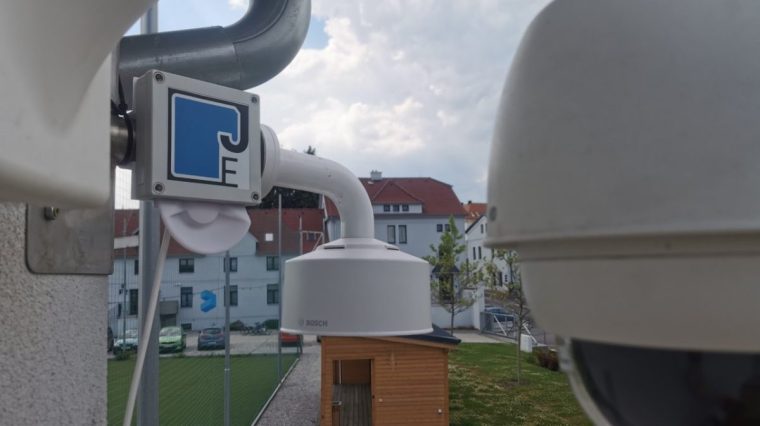
By using multiple sensors within a few hundred metres of each other, it is possible to calculate the precise location of the sound, allowing operators to focus CCTV cameras on an unfolding incident and dispatch emergency services.
The nature of the human voice means sound detectors are not yet foolproof. A scream generated by excitement or a prank is almost impossible to differentiate from one based on alarm or fear. Instead, the system sends a short snippet of audio and an AI “confidence rating” to an operator who can then decide how to respond.
During trials in the Czech Republic last year, the system detected a street fight in which a man collapsed with a heart attack. Officers deployed were able to use a defibrillator on the patient – an action which medics later said had saved the man’s life.
Mr Valis said his company understands sensitivities around the potential for devices to record audio in public areas. For this reason, the company’s devices have no capability to listen-in on or record human conversations.
Instead, the technology processes only a 1.5-second snippet of a suspicious “audio event”, such as shouting or gun fire, which is then sent to operators for further identification. The company says such samples are of insufficient duration to infringe privacy rules or allow the identification of a speaker.
‘Highly intrusive’
It is not clear, however, if systems provided by other manufacturers adhere to similarly stringent rules. Numerous commercially available CCTV systems advertise an ability to detect and record audio as well as providing alerts for sound events.
Watchdogs have taken a robust stance on routine recording in public spaces.
Guidance issued by the Information Commissioner’s Office (ICO) warns that eavesdropping on conversations between members of the public would be regarded as “highly intrusive and unlikely to be justifiable in most circumstances”.
A spokesperson added: “Organisations wanting to use CCTV need to be thinking about privacy risks and thinking especially carefully about making audio recordings. They should consider what those risks are and take steps to reduce them as much as possible before going ahead. The more information recorded the higher the bar of ensuring it is necessary, proportionate and fair.”
The National Police Chiefs Council told The i Paper it was “not aware” of any UK forces adopting the sound alert systems in police-operated systems. But local authorities insist sound detection is a useful tool in ensuring public safety and cracking down on crime and public nuisances such as anti-social behaviour.
Westminster City Council will next year double its use of movable audio-enabled CCTV cameras which have been deployed in central London as part of a £1.2m project to monitor activities from excess noise to fly tipping.
In a statement last year, the local authority said: “The cameras use specialist audio and noise detection AI technology, which will alert the control centre to potential incidents and provide immediate access to supporting footage. The audio detection technology works by detecting noise levels that exceed the defined parameters and can identify noises such as screams, explosions and gunshots.”
The council did not respond to a request from The i Paper for figures on how many offences the cameras had identified and whether they were configured to record audio to detect or prosecute offenders.
Until earlier this month, Birmingham City Council had stated on its website that its CCTV systems can “actively track the actions of suspects by recording images – and in some cases audio”. The local authority said that this related to a previous unsuccessful trial of a sound detection system and none of its public space cameras currently have an ability to record sound.
A spokesperson said: “The council was involved in a trial of an audible detection system in the past, but it was not implemented after the system was proven to be ineffective.”
Prison contraband deliveries
The use of the audio alert devices is not restricted to outdoor public spaces, with producers saying they are suitable for use in other public environments such as hospitals, schools and shops.
It is understood by The i Paper that HM Prison Service is exploring the use of sound detectors, including the Jalud Embedded devices, as part of efforts to improve defences against the onslaught of drones being used to drop contraband ranging from drugs and weapons to mobile phones into jails.
In October, MPs called for the urgent roll out of drone detection and jamming technology across all high-risk prisons in England and Wales following an increase of nearly 800 per cent in drone sighting around jails in the four years to 2023.
The Ministry of Justice has earmarked £10m to spend on anti-drone measures, including new systems to replace existing detection systems which criminals have learned to evade. A spokesperson said: “We are already considering how we can use technology to develop our security responses.”